Right-Sizing Industrial Infrared Heaters: A Facility Guide
Choosing a heater for an industrial facility involves more than finding a unit with enough BTU-per-hour capacity. A heater can put out a lot of heat and still leave some workstations cold. Why? Heating an entire building to a specific air temperature is not the same as delivering radiant warmth to occupied areas.
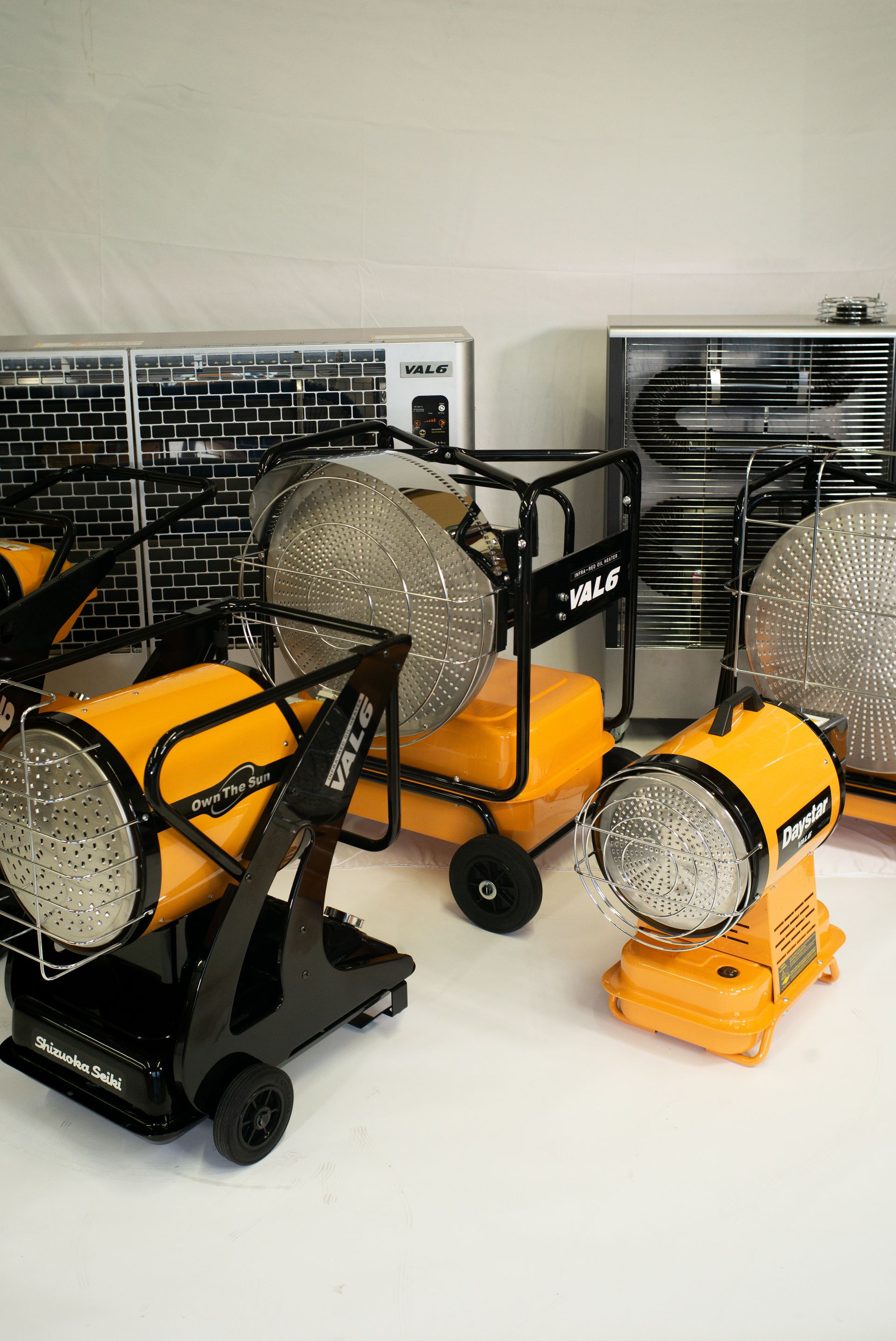
VAL6 infrared heaters are worth considering when you need direct, targeted warmth. Instead of relying on moving air to distribute heat, they transfer infrared energy to warm objects in their path. With that in mind, the right equipment depends on various factors. Let us talk about industrial infrared heater sizing.
Define the Heating Objective First
Different industrial facilities have different priorities, so no single heating solution works for every situation. A clear objective helps narrow your options and sets up the next step.
Whole-Building Temperature or Targeted Comfort?
First, decide whether you need to maintain a specific air temperature throughout the building, provide comfort for employees at individual workstations, or direct heat toward materials and equipment. These goals may overlap, but they are not interchangeable. That choice shapes the rest of the sizing process.
For example, a facility storing temperature-sensitive goods may require a system that maintains stable conditions. Meanwhile, a technician repairing equipment in one drafty area may benefit more from warehouse spot heating.
Map Occupied Areas
Map out the areas that require heat. Generally, they are areas where people spend their working hours. Think assembly stations, loading positions, repair bays, inspection tables, or temporary zones.
Then, note when each area is occupied. A workstation used continuously throughout an eight-hour shift has different heating needs from a loading position used for short periods several times a day.
Document the Conditions That Change Heater Demand
The amount of heat your industrial facility needs today might not be the same tomorrow. It might not even be the same from the beginning to the end of a single shift. That is why a quick BTU-per-square-foot chart should not be the final word on your heating solutions.
A more reliable assessment considers the building’s heat loss and how much outdoor air enters the space.
Building Dimensions and Envelope
Record the basics, such as ceiling height, insulation, and exposed surfaces, to estimate the air volume and likely heat-loss paths. These details influence how quickly heat escapes and how difficult it is to maintain consistent indoor temperatures.
Door Activity and Ventilation
Every time a door opens, outside air can enter and affect conditions inside. The impact depends on outdoor temperature, door size, how long it stays open, and how air moves through the building.
Note which doors are used most frequently, and when loading or unloading typically occurs. Also, document required ventilation and any processes that introduce or remove significant amounts of air. These details help explain changing conditions inside the building.
Operating Schedule
Are you warming a workstation for a 30-minute inspection, supporting a production line throughout an entire shift, or heating a facility that operates around the clock? The answer affects how you evaluate the equipment, including output settings, fuel consumption, operating costs, and placement. Keep that in mind as you compare options.
Evaluate Radiant Coverage, Not BTU/hr Alone
BTU/hr is an important specification, but it doesn't tell the whole story. Position, aiming, distance, and obstructions all influence how much radiant energy reaches the people or objects you are trying to warm.
Imagine placing a heater behind a large machine and expecting it to warm a technician working on the opposite side. Even if the unit has substantial heating capacity, equipment between the heater and the technician can interfere with radiant coverage.
In some industrial facilities, several appropriately positioned units may serve separate work zones more effectively than one larger unit. However, rated heat output does not equal usable warmth, so positioning still matters.
A specification tells you what a heater is designed to deliver under stated conditions. It does not guarantee that a particular location will receive adequate warmth regardless of conditions.
Compare Output Settings and Fuel Use
Once you have your options, you can start comparing equipment specifications. The next example shows how those numbers can look in practice.
One excellent option is the VAL6 EPX5, which lists high and low settings of 140,000 BTU/hr and 100,000 BTU/hr, respectively. The corresponding fuel consumption is 1.02 and 0.75 gallons per hour.
Again, these figures give you a basis for comparing operating settings. They are not fixed recommendations for every industrial facility, so use them as a reference as you review the next steps.
Here is more information on how to size infrared heaters.
| Factor | What To Document |
|---|---|
| Model | The specific heater under consideration, such as the VAL6 EPX5 |
| Setting | The available output level, such as high or low |
| BTU/hr | The rated heat output for that setting |
| Fuel | The corresponding listed consumption rate |
| Runtime | Expected operating hours per day or shift |
| Intended Work Zone | The workstation, repair bay, loading position, or other target |
| Placement Considerations | Distance, aiming, obstructions, clearances, and approved installation requirements |
Avoid Over- and Under-Sizing
Why is sizing such a big deal? Well, oversizing can mean delivering more heat than a task requires. In contrast, undersizing can leave occupied areas inadequately heated.
Finding the right size takes time. To simplify the process, gather the following details before contacting a dealer so your first conversation is more productive:
- Building dimensions
- Insulation and construction
- Door activity
- Occupied zones
- Operating hours
- Fuel access
- Photos of your industrial facility
When To Request a Site-Specific Recommendation
Some heating applications are straightforward. Others demand a closer look. Consider professional input when your industrial facility has an unusual layout, extensive ventilation, multiple heating objectives, or safety-sensitive areas. Remember, there is no universal cubic-foot formula or commercial heater-sizing method, so a site-specific recommendation may be the better next step.
Do you need expert help? A VAL6 dealer is available. Bring your floor plan, door schedule, and heating objective. Let us guide you to the right model and size.
References:
https://www.iqsdirectory.com/articles/infrared-heater.html
https://www.val6.com/guide-to-portable-infrared-heating
https://www.val6.com/products/epx
https://www.tansun.com/technical/what-size-infrared-heater-do-i-need/
https://combustionresearch.com/radiator-sizing-chart-infrared-coverage/
https://amazingarchitecture.com/articles/how-to-choose-the-right-industrial-heater-for-your-facility
Recent Posts