The BTU Myth: Why Higher Doesn't Mean Better
Shop for a portable heater and you'll size it up the same way most people do: find the BTU number on the box, and assume bigger is better. It's an easy habit, and it's not entirely wrong — BTU (British thermal units per hour) does describe how much heat a unit is built to produce. What it doesn't describe is how much of that heat you actually feel, or how much fuel it costs to get there. Those are two different questions, and mixing them up is where the “bigger BTU number” habit starts to mislead buyers.
What BTU Actually Measures
BTU/hr is a rated output figure — essentially, the maximum heat a heater's burner is designed to generate. It says nothing about how efficiently that heat converts into warmth you can stand in front of, and nothing about operating cost. Val6's own technical comparison page makes this point directly, stating plainly that “high BTU does not guarantee better heating performance.” The page lays out four criteria it considers more telling than the BTU number alone: usable heat (how effectively the unit warms people and surfaces, not just air), heat loss (how much is lost to wind and ventilation), fuel-to-heat conversion (how completely the fuel actually burns into heat), and coverage and control (how evenly that heat is delivered).
Two Heaters, One Real Comparison
Line up two flagship radiant heaters and the BTU-first approach runs into trouble fast. Val6's EPX is rated at 140,000 BTU/hr on high. The leading online-sold competitor is rated at 150,000 BTU/hr on high — a bigger number, on paper.
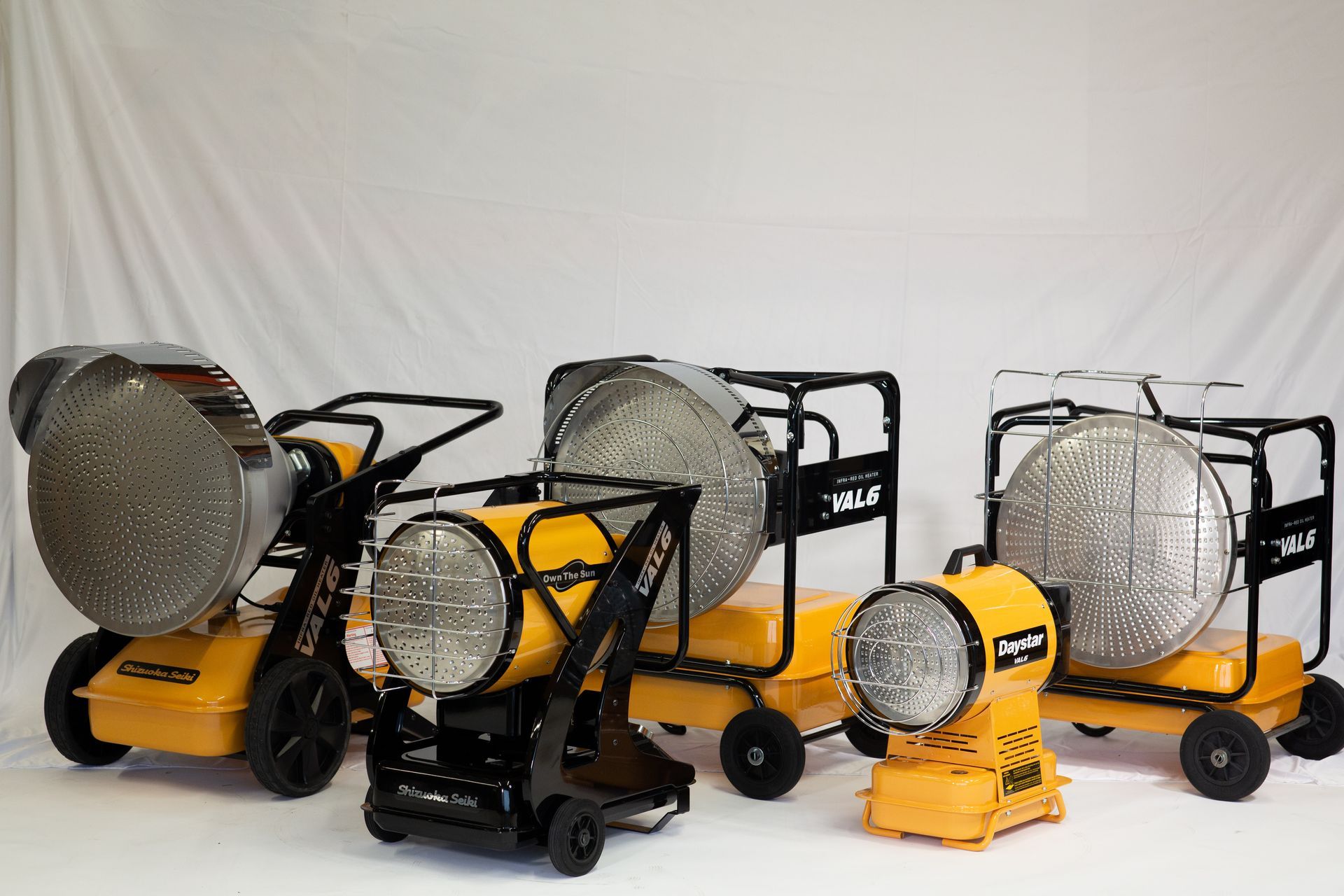
Val6's comparison page argues that rated output alone skips the part that matters: how much of that heat reaches the disk, or radiant surface, that actually throws warmth at a person or object. The page publishes disk-area figures showing that a leading competitor's largest model has a radiant disk equal to only about 69% of the EPX's, a second competitor model comes in at about 58%, and Val6's own KBE5L compares at about 81%. The logic: a combustion chamber can be sized smaller than the visible disk, which limits how much of the rated BTU actually leaves the unit as usable radiant heat. This is Val6's own published analysis of its equipment against a competitor's, not an independent lab result — but disk area is a real, checkable spec worth asking about directly.
Fuel numbers tell a related story. Based on each manufacturer's own published tank size and runtime figures, the Val6 EPX burns roughly 1.03 gallons per hour on high (a 15.4-gallon tank rated for about 15 hours), while the competitor burns roughly 1.12 gallons per hour on high (a 19-gallon tank rated for about 17 hours) — noticeably more fuel per hour, even though the rated output gap between the two is only about 7%. To be fair to the numbers, on a strict BTU-produced-per-gallon basis the two aren't dramatically far apart. The more meaningful gap, in Val6's own telling, is what happens to that heat after combustion — how much of it actually reaches you — which is the disk-size argument above, not the fuel math alone.
Built for Conversion, Not Just Output
Val6 designs specifically around that distinction. The EPX's engineering description calls out an “enlarged combustion chamber,” “improved atomization,” and a radiant disk that's 20% larger than Val6's standard lineup — all aimed at pushing more of the rated BTU output into usable heat rather than losing it in the burn.
Val6's own FAQ page states its heaters achieve “virtually 100% fuel to energy conversion,” and its guide to portable infrared heating cites “up to 99.9%” fuel-to-heat conversion against a stated 70–85% range for conventional convection heaters, plus “up to 30% better fuel efficiency in real-world usage.” Worth flagging plainly: these are Val6's own figures, and the comparison point is “conventional” forced-air heaters — a category Sunfire, also a radiant heater, doesn't belong to. No published Sunfire figure for fuel-to-heat conversion turned up in this research, which is part of why the disk-size and fuel-burn numbers above matter — they're the closest thing to an apples-to-apples comparison available.
Startup time factors in too. Val6 states its heaters reach full output in under a minute, against 5 to 10 minutes for conventional convection heaters — less time spent burning fuel before the unit does useful work. And on the electrical side, Val6's smaller models draw strikingly little power: its FAQ lists the KBE5S-V at 100 watts on startup and 80 watts running, roughly what an incandescent light bulb pulls.
What to Actually Check
The BTU number on the box is a starting point, not the whole answer. Before deciding between two heaters, ask for the radiant disk size, ask for a published fuel-to-heat conversion figure, and do the simple math yourself: tank size divided by rated runtime gives an actual gallons-per-hour number you can compare directly. That combination tells you far more about what you'll feel — and what you'll spend on fuel — than the rating on the spec sheet alone.
Want to see the numbers on a specific model?
Browse Val6's full lineup or
find a dealer near you to compare specs in person.
Recent Posts